How to Brew Loose-Leaf Tea Without a Teapot: 5 Everyday Methods
Loose-leaf tea has a reputation for needing equipment. Walk into a tea shop and you'll see gaiwans, gongfu sets, glass pots with bamboo handles, and strainers that cost more than the kettle. None of it is required to make a genuinely good cup. What loose leaf actually needs is hot water, a rough measure of leaf, and some way to separate the leaves from the liquid before they turn bitter. A mug and a kitchen strainer will do.
These five methods cover almost every kitchen. They range from dead simple to slightly fiddly, and every one of them beats a dusty tea bag left in a drawer for two years.
The Numbers That Barely Change
Whatever you brew in, three variables decide the outcome: how much leaf, how hot the water, and how long it steeps. Start with roughly 2 grams of leaf per 250 ml (8 oz) of water. That's a heaping teaspoon for most teas and a scant one for dense rolled oolongs, which unfurl into far more leaf than they appear to.
- Green and white tea: 75–85°C (170–185°F), 2–3 minutes
- Oolong: 85–95°C (185–205°F), 2–4 minutes, and it usually rewards a second steep
- Black tea: 95–100°C (200–212°F), 3–5 minutes
- Pu'er and other aged teas: just off the boil, 3–5 minutes
- Herbals and rooibos: boiling, 5–7 minutes
No thermometer? Boil the kettle and wait. Three minutes off the boil lands you near green-tea temperature; one minute is close enough for oolong. Water that's too hot doesn't wreck tea instantly, it just pulls bitterness out faster, so shorten the steep if you're unsure.
Method 1: Mug and Fine-Mesh Strainer
- Drop the leaves straight into your mug. No bag, no ball, no basket.
- Pour the water over them and start a timer.
- When the time is up, set a fine-mesh strainer over a second mug or a jug and pour the tea through it.
- Drink, or pour it back into the original mug once the leaves are out of the way.
The mesh matters more than the handle. A cheap sieve with tight wire does a better job than a decorative strainer with wide gaps. If you have a small colander, that works too — you'll just catch fewer of the tiny fragments.
Method 2: The French Press
A French press is the best stand-in for a teapot because it gives whole leaves room to expand and has a plunger that traps them at the bottom. It's also the easiest way to brew for two or three people at once.
Use about one tablespoon of leaf per 350 ml of water, add water off the boil as appropriate, and stir once so nothing floats dry. Steep for the time your tea needs, then press the plunger down slowly and pour the tea out immediately. Leaving it sitting on the leaves keeps extracting, and the second half of the pot will taste noticeably harsher than the first.
One practical note: if the same press also makes your coffee, keep it clean. Coffee oils cling to the mesh and the plastic collar and will show up in a delicate green tea. A quick rinse with hot water after every use is usually enough.
Method 3: The Two-Cup Decant
No strainer at all. Steep the leaves in one mug, then pour steadily into a second mug, stopping before the last splash. The leaves stay behind in the first cup. A few floaters escaping is normal and harmless.
This works best with large-leaf teas: whole-leaf oolongs, long silver needle buds, rolled leaves that stay intact. It's clumsy with broken leaf, fannings, or anything dusty, because those scatter and follow the pour. If your tea is at the bottom of the bag, use a strainer.
Method 4: Tea Ball, Basket, or Paper Filter
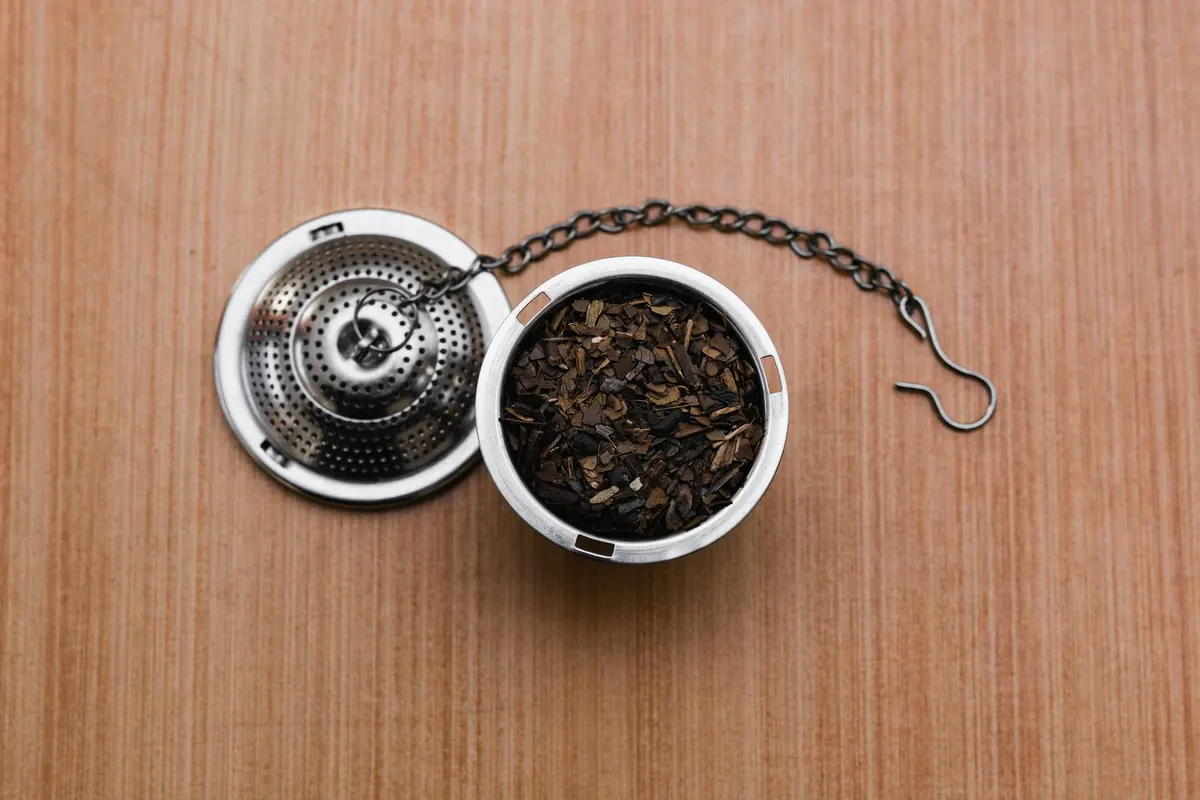
Infusers are fine as long as you don't overstuff them. A tea ball filled to the top leaves the leaf no room to expand, so the water can only reach the outside of the clump. Fill it halfway at most. Fine mesh beats the old wire-cage style, which lets fragments through.
A stainless infuser basket that sits over the rim of a mug is the closest thing to a proper teapot for one person, and it lifts out cleanly when the time is up. For very fine teas, rooibos, or a broken-leaf blend, line a strainer with an unbleached paper coffee filter — the pour will be slow and you'll lose a little body, but the cup will be clear. A clean cloth nut-milk bag does the same job faster if you have one.
If the cup tastes bitter, the answer is rarely a new gadget. It's less time, cooler water, or fewer leaves next round.
Method 5: Cold Brew in a Jar
Cold water extracts slowly and gently, which makes this the most forgiving method of all — and the one to reach for when you want tea waiting in the fridge.
- Add roughly 10–15 grams of leaf (about 2 tablespoons) to a 1-litre jar.
- Fill with cold filtered water and stir.
- Refrigerate for 8–12 hours. Taste at the 8-hour mark; greens and whites are usually ready, blacks and herbals can go longer.
- Strain through a fine sieve or coffee filter into a clean bottle.
Cold brew keeps for three or four days in the fridge. It's mild, sweet, and low in bitterness, which makes it a good option for green teas you've struggled with hot.
Re-Steeping, Cleanup, and Getting Better
Most loose-leaf tea gives a second, often better, steep. Pour fresh hot water over the same leaves, add 15–30 seconds to the time, and taste. Whole-leaf oolongs and pu'er can go three or four rounds; fine broken blacks usually give one good cup and give up.
Rinse your strainer, press, or basket with hot water as soon as you're done. Tannins dry into a film that flavours the next cup, and scrubbing at dried residue scratches fine mesh. A soft sponge and warm water is plenty; skip the soap, since mesh holds the scent.
Used leaves go straight into the compost, or onto a saucer to dry if you want them out of the bin. Keep a notebook if you like, but a simpler habit works better: when a cup is disappointing, change one thing. Cooler water, or thirty seconds less. Two or three rounds of that and you'll know your tea better than any brewing chart can tell you.
Photo: Lucas Oliveira / Pexels
Autumn Tea Pairings: 6 Warming Teas and Simple Snacks for Cool Evenings
Six fall tea pairings that match spiced, roasted, and earthy brews with easy snacks — cardamom-apple...
How to Read Tea Labels: Decoding Origin, Grade, and Harvest Terms
Tea labels are easier to read once you know which words describe origin, grade, harvest, and freshness....
About Us